Carbon Dioxide Welding Gas
CO2 gas for MIG welding and metal fabrication, supplied by Havard Welding, your local CO₂ welding gas supplier in East Houston.
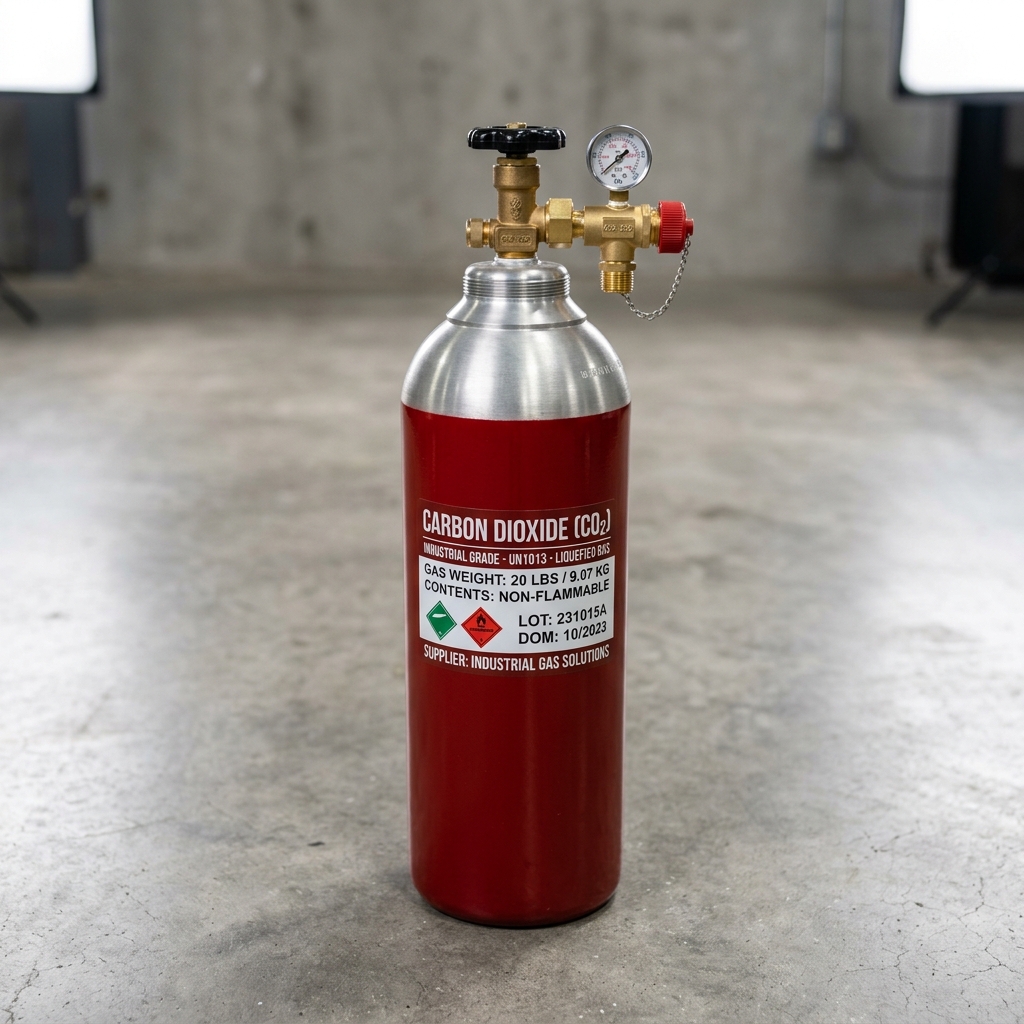
Carbon Dioxide Supply for MIG Welding & Industrial Operations
Carbon dioxide remains one of the most widely used industrial gases across welding and manufacturing because of its versatility and cost-effective performance. Havard Welding supplies CO2 welding gas in multiple cylinder options for fabrication shops, structural steel contractors, production facilities, repair operations, and manufacturers requiring a steady source of shielding gas. From single-cylinder exchanges to larger-volume requirements, our team helps keep welding operations supplied without unnecessary downtime.
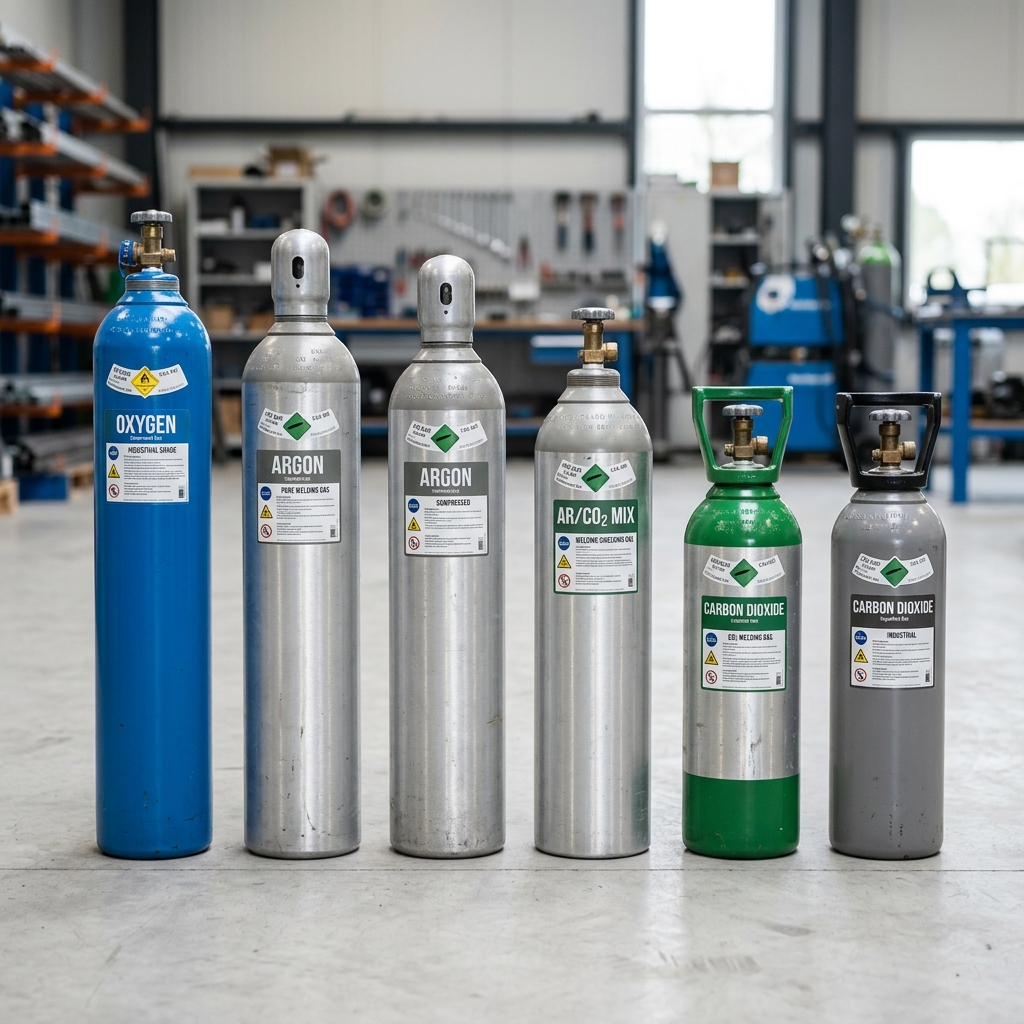
About Carbon Dioxide Welding Gas
Carbon dioxide (CO₂) is a colorless, odorless, nonflammable gas with a naturally occurring concentration of approximately 0.03% in Earth\'s atmosphere. Although commonly recognized for beverage carbonation and refrigeration, carbon dioxide plays a significant role in industrial manufacturing, particularly as a shielding gas in welding applications.
One of carbon dioxide\'s unique characteristics is its ability to exist simultaneously as a solid, liquid, and gas at a temperature of -69.9°F (-56.6°C) and a pressure of 60.4 psig (416 kPa), known as its triple point. At atmospheric pressure and temperatures below -110°F (-79°C), carbon dioxide forms solid dry ice with a density of approximately 97.4 lb/ft³.
Because atmospheric concentrations are relatively low, commercial carbon dioxide is not produced directly from air. Instead, it is recovered from by-product streams generated during industrial manufacturing processes, including the combustion of coal and natural gas. For transportation and storage, bulk carbon dioxide is typically maintained as a refrigerated liquid under pressure before being distributed into cylinders and bulk systems. While carbon dioxide is not classified as a truly inert gas, it remains chemically stable with many common materials. This makes it suitable for inerting, tank blanketing, reactor purging, and numerous industrial processing operations where atmospheric contamination must be controlled. In welding, carbon dioxide remains one of the most widely used shielding gases for MIG welding. It may be used as a straight shielding gas or blended with argon to improve weld penetration, arc characteristics, and overall welding performance on carbon steel and other ferrous metals.
Carbon Dioxide Gas Applications
Carbon dioxide is vital for various industrial and commercial uses, including controlled atmospheres, shielding, cooling, and pressurized gas systems.
MIG Welding
We supply CO2 gas for MIG welding, metal fabrication, manufacturers, and industrial facilities throughout East Houston.
Argon/CO2 Blends
When combined with argon, carbon dioxide welding gas improves arc stability, bead appearance, and welding performance across a variety of steel fabrication applications.
Arc Welding & Fabrication
CO2 MIG welding gas helps protect the weld zone during manual and automated welding, supporting consistent weld quality in industrial fabrication environments.
Tank Blanketing & Purging
Carbon dioxide supply is used to blanket storage tanks and purge processing equipment where oxygen displacement helps maintain controlled operating conditions.
Beverage Carbonation
CO2 welding gas is widely used to carbonate soft drinks and other beverages, providing consistent carbonation throughout food and beverage production.
Fire Protection
Carbon dioxide welding gas is used in fire suppression systems and portable extinguishers because it quickly displaces oxygen without leaving residue behind.
Dry Ice & Food Processing
Solid carbon dioxide (dry ice) is used for food freezing, cold-chain transportation, and temperature-controlled shipping where steadfast cooling is required.
Why CO2 Remains a Proven Shielding Gas
Carbon dioxide is a popular shielding gas for MIG welding because it provides strong weld penetration and is cost-effective for high-production settings.
Its high thermal conductivity transfers more heat to the workpiece, making it especially effective for welding thicker carbon steel materials. During welding, carbon dioxide also promotes oxidation of ferrous metals, contributing to the deep fusion characteristics valued in structural fabrication and manufacturing. For applications requiring improved arc stability and reduced spatter, carbon dioxide is frequently blended with argon. These mixtures combine the penetration benefits of CO2 with the smoother arc characteristics of argon, making them suitable for a broad range of industrial welding operations.
Safety & Chemical Specifications
DOT Information
| Property | Specification |
|---|---|
| DOT Name | Carbon Dioxide, Liquefied |
| DOT Hazard Class | Nonflammable Gas |
| DOT Label | Nonflammable Gas |
| DOT ID No. | UN1013 |
| CAS No. | 624-64-6 |
| Valve Outlet | CGA 320, CGA 960 Pin-indexed |
| Physical State in Cylinder | Liquid under own vapor pressure |
| Fire Potential | Non-Flammable |
| Major Hazards | Asphyxiant, High Pressure Inhalation |
Physical Properties of Carbon Dioxide
| Property | Value |
|---|---|
| Formula | CO2 |
| Molecular Weight | 44.01 lb/mol |
| Specific Volume at 70°F and 1 atm | 8.74 ft³/lb (0.42 m³/kg) |
| Specific Heat | 8.92 BTU/lbmol-deg F @ 70 deg. F |
| Specific Gravity | 1.555 |
| Gas Density | 0.1144 lb/ft³ @ 70 deg. F. 14.7 PSIA |
| Psat @ 70 deg F | 852.8 psia |
| Liquid Density @ 70 deg F | 47.64 lb/ft³ |
Boiling Point
| Temperature: | -109.2 deg. F (-79 deg. C) |
Critical Point
| Temperature: | 87.9 deg. F |
| Pressure: | 1070.6 PSIA |
Triple Point
| Temperature: | -69.9 deg. F |
| Pressure: | 75.13 PSIA |
Carbon Dioxide Cylinders
| PACKAGING | CYLINDER SIZE | APPROXIMATE WEIGHT OF FULL CYLINDER (LBS.) | PRESSURE (PSI @ 70F) | DIMENSIONS (Height x Diameter) |
|---|---|---|---|---|
| 20 lbs. | 20 lbs. | 45 | 400 | 27" x 8" |
| 50 lbs. | 50 lbs. | 160 | 400 | 56" x 9" |