Helium Welding Gas
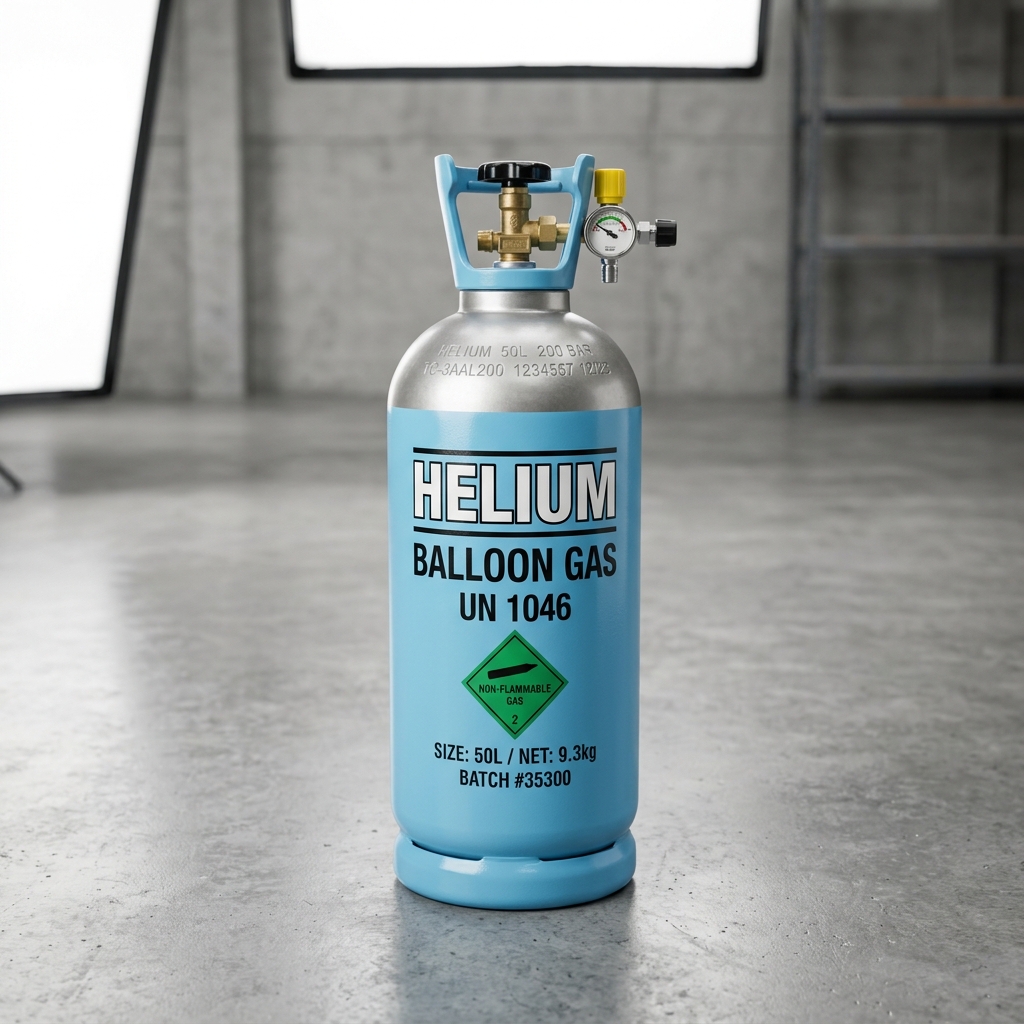
Havard Welding supplies helium gas cylinders industrial tanks for TIG welding, specialty fabrication, research, and manufacturing, with cylinder options to match your operation.
Helium Gas Delivery Systems for Welding & Manufacturing
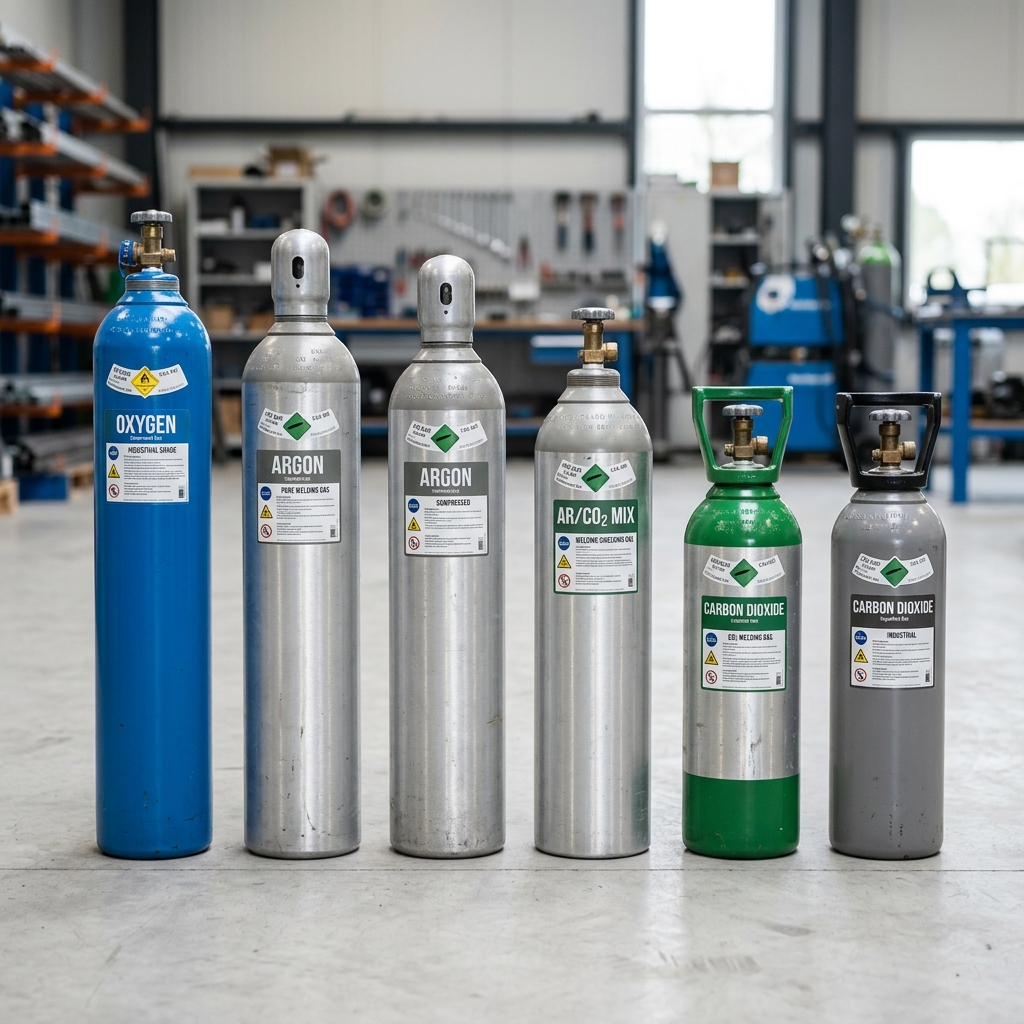
Havard Welding supplies helium gas for welding, fabrication, aerospace manufacturing, research laboratories, and industrial facilities throughout East Houston. We offer helium gas cylinder in various options, larger cylinder packages, and bulk supply options to support everything from precision TIG welding to specialized production processes.
About Helium Gas
Helium (He) is the second-lightest element in the periodic table, surpassed only by hydrogen. It is a colorless, odorless, tasteless gas with a remarkably low specific gravity of just 0.138, making it significantly lighter than air. As one of the noble gases, helium remains chemically inert under normal conditions and forms very few stable compounds.
Helium is present in Earth\'s atmosphere at an extremely low concentration of approximately 0.0005 percent. Because atmospheric quantities are so limited, commercial helium is recovered from selected natural gas reservoirs where it naturally accumulates over millions of years. After extraction, the gas is purified and compressed for industrial, scientific, and medical applications. Once released into the atmosphere, helium eventually escapes Earth\'s gravitational pull, making it a non-renewable resource.
Properties and History of Helium
Among all industrial gases, helium possesses one of the lowest boiling points at -452.1°F (-268.9°C). It is also the most difficult gas to liquefy and cannot be solidified under normal atmospheric pressure. These characteristics make liquid helium indispensable for cryogenic cooling and research involving temperatures approaching absolute zero.
Helium was first identified in 1868 through observations of the sun\'s corona during a solar eclipse before being isolated from terrestrial sources in 1895. Later, in 1907, Sir Ernest Rutherford demonstrated that alpha particles are helium nuclei, further advancing scientific understanding of the element.
Safety & Chemical Specifications
DOT Information
| Property | Specification |
|---|---|
| DOT Name | Helium |
| DOT Hazard Class | Nonflammable Gas |
| DOT Label | Nonflammable Gas |
| DOT ID No. | UN1046 |
| CAS No. | 7440-59-7 |
| Valve Outlet | CGA 580 |
| Physical State in Cylinder | Gas |
| Fire Potential | Non-Flammable |
| Major Hazards | High Pressure Suffocation |
Physical Properties of Helium
| Property | Value |
|---|---|
| Formula | He |
| Molecular Weight | 4.003 lb/mol |
| Specific Volume at 70°F and 1 atm | 96.71 ft³/lb (6.00 m³/kg) |
| Specific Heat | 4.97 BTU/lbmol-deg F @ 70 deg. F |
| Specific Gravity | 0.138 |
| Gas Density | 0.010346 lb/ft³ @ 70 deg. F. 14.7 PSIA |
Boiling Point
| Temperature: | -452.1 deg. F (-268.9 deg. C) |
| Liquid Density: | 7.804 lb./ft³ |
| Latent Heat: | 8.778 BTU/lb. |
Critical Point
| Temperature: | -450.3 deg. F |
| Pressure: | 33.2 PSIA |
Melting Point
| Temperature: | -455.8 deg. F |
| Pressure: | 0.0735 PSIA |
Balloon Capacity Specifications
Formula: Volume in cubic feet = \(\frac{4}{3} \pi r^3 / 1728\)
Cubic Feet Per Balloon
| BALLOONS | Size | Volume (ft³) |
|---|---|---|
| Latex | 9" | 0.27 |
| Latex | 10" | 0.30 |
| Latex | 11" | 0.50 |
| Latex | 12" | 0.52 |
| Latex | 14" | 1.00 |
| Latex | 16" | 1.25 |
| Latex | 20" | 2.42 |
| Latex | 36" | 4.14 |
| Mylar | 18" | 0.44 |
| Mylar | 26" | 1.5 |
| Weather Balloons | 4' | 33 |
| Weather Balloons | 5' | 65 |
| Weather Balloons | 8' | 268 |
| Weather Balloons | 12' | 905 |
| Weather Balloons | 20' | 4189 |
Balloons per Cylinder
| Cylinder | 9" L | 10" L | 11" L | 12" L | 14" L | 16" L | 20" L | 36" L | 18" M | 26" M |
|---|---|---|---|---|---|---|---|---|---|---|
| 22 ft³ | 81 | 73 | 44 | 42 | 22 | 17 | 9 | 5 | 50 | 14 |
| 58 ft³ | 214 | 193 | 116 | 111 | 58 | 46 | 23 | 14 | 131 | 38 |
| 110 ft³ | 407 | 366 | 220 | 211 | 110 | 88 | 45 | 26 | 250 | 73 |
| 137 ft³ | 507 | 456 | 274 | 263 | 137 | 109 | 56 | 33 | 311 | 91 |
| 219 ft³ | 811 | 730 | 438 | 421 | 219 | 175 | 90 | 52 | 497 | 146 |
| 286 ft³ | 1059 | 953 | 572 | 550 | 286 | 228 | 118 | 69 | 650 | 190 |
Helium High Pressure Cylinders
*Denotes light-weight aluminum cylinder
| PART NUMBER | CYL. SIZE | WEIGHT OF GAS (LBS.) | APPROX. WT. OF FULL CYLINDER (LBS.) | PRESSURE (PSI @ 70F) | GALLONS | LITERS | DIMENSIONS (Height x Diameter) |
|---|---|---|---|---|---|---|---|
| HELE* | 22 ft³ | 0.225 | 9 | 1800 | 165 | 623 | 30" x 4-1/2" |
| HEL058* | 58 ft³ | 0.59972 | 22 | 1800 | 436 | 1642 | 27" x 8" |
| HEL110 | 110 ft³ | 1.1374 | 58 | 2265 | 823 | 3115 | 47" x 7" |
| HEL110* | 110 ft³ | 1.1374 | 44 | 2265 | 823 | 3115 | 41" x 8" |
| HEL137* | 137 ft³ | 1.41658 | 42 | 2265 | 1030 | 3880 | 47" x 8" |
| HEL219 | 219 ft³ | 2.26446 | 135 | 2265 | 1638 | 6202 | 51" x 9" |
| HEL286 | 286 ft³ | 2.95724 | 160 | 2200 | 2150 | 8099 | 55" x 9-1/4" |
Helium Gas Applications
Helium is applied across advanced industries where its unique cooling, density, and inert properties are essential.
TIG Welding
Helium gas for TIG welding is commonly selected for thicker materials and metals with high thermal conductivity, including aluminum, copper, and magnesium. Helium produces a hotter welding arc, allowing greater weld penetration and increased travel speeds.
Arc & Fabrication
Helium welding gas is applied as a shielding gas in specialized welding applications that require increased heat input and enhanced fusion. It is frequently blended with argon to achieve specific arc characteristics.
Leak Detection
Helium\'s exceptionally small atomic size allows it to pass through tiny openings that other gases cannot. Combined with its ease of detection, this makes helium the preferred gas for precision leak testing across aerospace, medical, and industrial industries.
Cryogenic Cooling
Liquid helium serves as the primary refrigerant for scientific research and cryogenic systems operating at temperatures near absolute zero. Its unique thermal properties support laboratories, particle research, and superconducting technologies.
Medical Imaging
Superconducting magnets used in Magnetic Resonance Imaging (MRI) systems depend on liquid helium to maintain extremely low operating temperatures required for consistent imaging performance.
Aerospace Systems
Helium is used to pressurize rocket fuel tanks and propulsion systems before launch because it remains stable across a broad range of operating conditions.
Deep-Sea Diving
Professional diving operations use helium-oxygen breathing mixtures during deep-water dives. Helium reduces nitrogen absorption in the bloodstream, helping lower the risk of decompression sickness.
Balloons & Airships
The low density and nonflammable nature of helium make it the preferred lifting gas for balloons, blimps, and lighter-than-air aircraft.
Why Helium Is Used for Specialized Welding
While argon remains the standard shielding gas for many welding applications, helium gas for welding offers advantages where additional heat input is beneficial.
Helium creates a hotter, broader welding arc that transfers more energy into the base metal. This makes it particularly effective for thicker sections and metals with high thermal conductivity that can be difficult to weld using argon alone. Many fabricators also combine helium with argon to tailor arc performance for specific applications. These gas mixtures can improve travel speed, increase penetration, and support high-quality welds across demanding manufacturing environments. Its inert nature also prevents unwanted chemical reactions during welding, allowing the molten weld pool to remain protected throughout the process. For industries requiring precision, repeatability, and consistent thermal performance, helium welding gas continues to play an important role in advanced fabrication operations.